



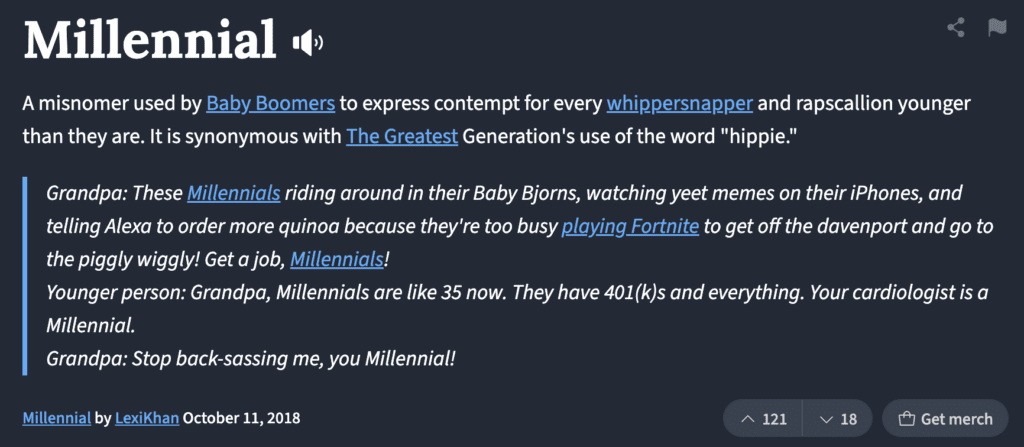
I was born at the very end of the millennial generation, which means I live in a strange little marketing twilight zone.
I remember dial-up internet, but I also know how to make a TikTok. I begged my parents for a Facebook in 8th grade, but I also fully understand why Gen Z thinks Facebook is where birthdays go to die. I grew up watching commercials, but now I skip anything that feels remotely like an ad with the speed and precision of an Olympic sport.
So when it comes to generational marketing, I feel like I have one foot in “print the coupon” and one foot in “make it a meme.” And honestly? That is a helpful place to be.
Because every generation understands, receives, and responds to marketing a little differently. Not because one generation is smarter or harder to reach than another, but because we were all trained by different versions of the world. Some of us learned to trust billboards. Some of us learned to trust reviews. Some of us learned to trust strangers on TikTok with ring lights and oddly specific product recommendations.
So let’s break it down.
Baby Boomers: The Loyalists
Boomers tend to value reputation, consistency, and trust. They want to know who you are, what you do, how long you have been doing it, and whether a real human can answer the phone if something goes wrong. They are not necessarily looking for the flashiest brand in the room. They are looking for the brand that feels stable, reliable, and easy to understand.
The best way to market to boomers is to be clear, credible, and helpful. Give them information they can actually use. Make your website easy to navigate. Put your phone number somewhere obvious. Share testimonials. Explain your process. Do not assume they want to dig through six pages, three dropdown menus, and a vague “start your journey” button just to figure out how to contact you.
The worst thing you can do is assume boomers are not online. They absolutely are. They are on Facebook. They are reading emails. They are checking reviews. They are clicking links. Sometimes they are even commenting “beautiful family” on a blurry photo from someone they met once in 1987.
Where businesses miss it is by either ignoring boomers completely or talking to them like they are technologically helpless. They are not. They just do not want to decode your ultra-minimalist website with four words, no phone number, and a contact form that feels like it was designed by someone allergic to clarity.
For boomers, practical wins. If they can quickly understand what you offer, why they should trust you, and what step to take next, you are already ahead of a lot of businesses.
Gen X: The Skeptics
Gen X might be the hardest generation to impress because they can smell nonsense from a mile away. They grew up with latchkeys, infomercials, mall culture, and the early internet. They have seen every version of “this product will change your life,” and they are not easily moved by fluff.
The best way to market to Gen X is to respect their intelligence. Get to the point. Show them the value. Explain why it matters. Then give them enough space to make a decision without acting like a golden retriever with a lead magnet.
The worst way to market to Gen X is to overhype everything. They do not need your product to be “revolutionary.” They need it to work. They do not want a 14-email nurture sequence telling them they are about to “unlock their next level.” They want to know the price, the process, the problem you solve, and whether this is actually worth their time.
Gen X tends to appreciate direct messaging, practical content, strong websites, comparison guides, and email that does not feel desperate. If boomers want trust and millennials want connection, Gen X wants competence. They are not anti-marketing. They are anti-being-marketed-to poorly.
Millennials: The Overthinkers With Purchasing Power
As a millennial, I can say this with love: we are exhausting.
We want brands to be authentic, but not too curated. Funny, but not trying too hard. Socially aware, but not performative. Beautiful, but not fake. Helpful, but not salesy. We want the email discount code, but we also want the brand story, the founder’s dog’s name, and a review from someone who has our exact skin type, body type, lifestyle, and childhood wound.
Millennials came of age during the rise of social media, influencer marketing, online reviews, and personal branding. We watched the internet become part of everyday life in real time. Because of that, we are very comfortable buying online, but we usually need a few touchpoints first.
The best way to market to millennials is to build trust through content. Strong visuals matter. A clear brand voice matters. Reviews matter. Educational posts matter. Behind-the-scenes content matters. We like to feel like we know the brand before we buy from the brand.
The worst way to market to millennials is to be generic. Millennials are the generation of “I researched this for three weeks and made a spreadsheet before buying a vacuum.” We are not always impulsive, but we are highly influenced by good branding, strong storytelling, personal recommendations, and content that makes us feel understood.
But please, for the love of iced coffee, do not just slap “authentic” on your brand and call it a strategy. Millennials do not need perfect. We actually like a little realness. But we do need to feel like there is a brain, a heart, and a plan behind what you are saying.
Gen Z: The Human Lie Detectors
Gen Z has grown up completely surrounded by marketing. Ads in apps. Ads in videos. Ads from influencers. Ads pretending not to be ads. Ads from brands trying to sound like their best friend. Ads from brands commenting “slay” on TikToks like a divorced dad who just learned slang.
So naturally, Gen Z is very good at spotting when something feels forced.
The best way to market to Gen Z is to be real, fast, useful, and culturally aware. They value humor, transparency, speed, creativity, and community. They are used to content that gets to the point quickly, entertains them, or teaches them something immediately.
The worst way to market to Gen Z is to try too hard to be cool. Gen Z does not necessarily hate brands. They just hate brands that act like they are people without earning it. They can tell when a company is using slang because someone in a quarterly planning meeting said, “We need to sound younger.”
This is where businesses get confused. Authentic does not mean sloppy. A shaky iPhone video can perform really well, but only if the idea is strong. Gen Z does not need every post to look like a glossy campaign, but they do know when a brand is posting just to post.
They also do not want to be talked down to. They want brands to understand the culture without hijacking it. In other words, do not put “rizz” in your caption unless you are emotionally prepared to be judged.
Gen Alpha: The Future Consumers Watching Everything
Gen Alpha is still young, so for most businesses, they are not the primary buyer yet. But they are already influencing buying decisions in a major way.
They know YouTube. They know apps. They know brands. They know characters. They know packaging. They know what they want before they can spell it. For them, digital content is not separate from real life. It is just life.
The best way to think about Gen Alpha is to recognize how much influence they already have, especially for brands that serve families. Parents are still the buyers, but kids influence restaurants, vacations, toys, clothing, snacks, entertainment, and probably more household decisions than most parents want to admit.
The worst way to market around Gen Alpha is to underestimate that influence or rely completely on gimmicks. Bright colors and fun content might get attention, but parents still need to feel like the decision is smart, safe, valuable, or worth the money.
For family-focused brands, the sweet spot is creating content that is visually clear, easy to understand, experience-driven, and parent-approved. Gen Alpha may be young, but they are already shaping what feels normal in marketing. And spoiler: they are not going to read your 900-word caption. Unless maybe it has Minecraft in it.
So What Does This Mean For Your Business?
Here is the big takeaway: generational marketing is not about stereotyping people. It is about understanding the environments that shaped how they make decisions.
Boomers were shaped by reputation. Gen X was shaped by independence. Millennials were shaped by connection and research. Gen Z was shaped by speed, transparency, and content overload. Gen Alpha is being shaped by digital-first everything.
But all generations still want the same basic things. They want to know if they can trust you. They want to know if you understand their problem. They want to know if what you offer is worth their money. And they want to know what happens next.
The way you answer those questions might change depending on the audience, but the foundation stays the same. Good marketing is clear. Good marketing is consistent. Good marketing understands the buyer. Good marketing does not make people feel like they are being chased through the internet by a desperate salesperson holding a Canva graphic.
At The Elevated Social, we help brands figure out how to show up in a way that actually makes sense for the people they are trying to reach. Not every business needs to be on TikTok. Not every brand needs a long email funnel. Not every audience wants memes. And not every piece of content needs to start with “POV.”
The goal is not to market to everyone the same way. The goal is to know who you are talking to, what they care about, and how to communicate in a way that feels clear, compelling, and actually useful.
Because when you understand your audience, marketing gets a whole lot less cringey.
And honestly, we could all use less cringey marketing.








+ show Comments
- Hide Comments
add a comment